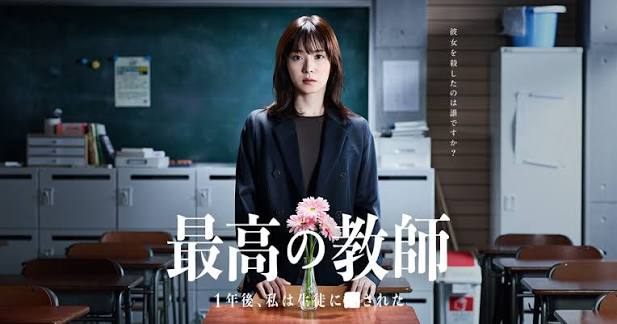
Japanese drama has undergone a remarkable transformation since 2010, reflecting Japan’s shifting cultural, political, and social landscape. Earlier dramas often emphasized family life and traditional values, but modern series explore complex, socially conscious themes — including gender equality, regional revitalization, and mental health.
This evolution mirrors Japan’s own social changes: a society that is slowly opening up to diversity, individuality, and the power of personal stories.
👩🦰 The Rise of Female-Led Narratives
One of the most notable shifts is the rise of female-driven storytelling. In the past, women in J-dramas were often portrayed as housewives, love interests, or moral voices. Today, they are multidimensional protagonists confronting real-world challenges.
A standout example is Woman (2013, NTV) starring Hikari Mitsushima. The drama tells the story of Koharu Aoyagi, a single mother raising her two children after her husband’s death. It offers a raw and emotional look at the struggles of single motherhood in Japan, sparking national dialogue about gender roles and social welfare.
Another strong example is 35-sai no Kōkōsei (2013, NTV), starring Ryoko Yonekura as a 35-year-old woman who re-enters high school to expose systemic issues like bullying and teacher negligence. The series boldly questioned conformity and ageism in Japan’s education system.
These dramas marked a turning point, showing that female characters could embody both strength and vulnerability while leading narratives once reserved for men.
💬 Social Awareness Through Storytelling
Modern Japanese dramas have become more socially engaged.
Where networks once avoided controversial topics, series now explore mental health, discrimination, crime, and post-disaster recovery with sensitivity and realism.
In Amachan (2013, NHK), Rena Nōnen portrays a Tokyo teenager returning to her coastal hometown in Tōhoku to become an “ama” (female diver). The show captured Japan’s collective spirit of recovery after the 2011 Great East Japan Earthquake.
Meanwhile, Unnatural (2018, TBS), starring Satomi Ishihara, follows a forensic pathologist investigating mysterious deaths. Beyond its gripping cases, it delves into ethical dilemmas such as organ donation, corporate responsibility, and medical malpractice — all while normalizing female leadership in science.
These series represent a new wave of realism in Japanese entertainment: using drama not just for escape, but for reflection and social critique.
🇯🇵 Reflection of a Changing Japan
The evolution of Japanese drama since 2010 reflects a society in transition.
Topics once confined to art films — such as gender identity, rural depopulation, and the balance between tradition and modernity — have reached mainstream television.
Modern J-dramas are now mirrors of contemporary Japan, portraying a generation redefining what it means to live, love, and belong in a rapidly evolving society.
🇯🇵🇰🇷 Japanese vs. Korean Dramas — Different Paths to Social Commentary
While both Japanese and Korean dramas have become global sensations, they differ in tone, pacing, and how they approach social issues.
| Aspect | Japanese Dramas | Korean Dramas |
|---|---|---|
| Narrative Style | Subtle and introspective — often focusing on daily life and quiet emotional changes. | Melodramatic and fast-paced — emphasizing emotional highs and strong plot twists. |
| Social Themes | Focus on individual struggles: loneliness, aging, family disconnection, societal pressure. | Focus on systemic issues: class inequality, corruption, and moral conflict. |
| Female Representation | Increasingly realistic portrayals — independent women in work, motherhood, and self-growth. | Women often portrayed as resilient but still constrained by romance-centered narratives. |
| Cultural Tone | Reflects Japan’s introspective nature and understated empathy. | Reflects Korea’s emotional intensity and societal ambition. |
For instance, while Unnatural quietly questions Japan’s medical ethics, a Korean equivalent like My Mister (2018) openly confronts class despair and depression.
Both approaches reveal how East Asian entertainment is reshaping social discourse — one through subtle realism, the other through emotional catharsis.
🎬 Featured Dramas That Redefined the Genre
Unnatural (2018, TBS) — A forensic drama exploring morality, science, and empathy.
Woman (2013, NTV) — Realistic portrait of single motherhood starring Hikari Mitsushima.
35-sai no Kōkōsei (2013, NTV) — A thought-provoking take on ageism, bullying, and social pressure.
Amachan (2013, NHK) — A heartwarming look at community resilience and post-disaster revival.
Discover more from Jdramatastic
Subscribe to get the latest posts sent to your email.