💍 Marry My Husband (Japanese Drama, 2025): When Love, Betrayal, and Quiet Revenge Redefine Marriage

The Japanese remake of the Korean hit Marry My Husband premiered on June 27, 2025, exclusively on Prime Video Japan. This adaptation reimagines the revenge-fantasy story through a quieter, emotionally grounded Japanese lens — focusing less on spectacle and more on personal rebirth.
In this version, Kanbe Misa endures betrayal by both her husband and best friend before dying — only to mysteriously awaken ten years earlier, with a chance to rewrite her fate. What unfolds is not simply vengeance, but a profound journey toward self-worth, healing, and moral reckoning.
⭐ Main Cast & Characters

Fuka Koshiba — as Kanbe Misa (Female Lead)
Fuka Koshiba carries the drama with calm strength and deep empathy. Her portrayal of Misa balances vulnerability with determination, showing a woman slowly reclaiming her identity after years of quiet suffering. Every glance and hesitation feels real — a reflection of how Japanese women often navigate emotion behind restraint.
🎭 Overall performance: ⭐⭐⭐⭐⭐
Takeru Satoh — as Suzuki Wataru (Male Lead)
Satoh Takeru brings emotional maturity and subtle warmth to Wataru, the dependable colleague who becomes Misa’s unexpected ally. Known for Rurouni Kenshin and First Love, Satoh’s minimalist acting style perfectly matches the tone — calm, introspective, and quietly magnetic.
🎭 Overall performance: ⭐⭐⭐⭐⭐

Yu Yokoyama — as Hirano Tomoya (Misa’s Husband)
Yokoyama plays Tomoya with unsettling realism — an ordinary man whose selfishness and cowardice destroy everything around him. His composed delivery and detached manner make the betrayal more painful. It’s not exaggerated evil, but the kind that feels uncomfortably familiar.
🎭 Overall performance: ⭐⭐⭐⭐☆
Sei Shiraishi — as Esaka Reina (Misa’s Best Friend)
Shiraishi’s Reina is the perfect foil: graceful on the surface, envious underneath. Her performance captures how jealousy festers behind smiles. Instead of melodrama, she opts for quiet manipulation, which gives the betrayal scenes a chilling authenticity.
🎭 Overall performance: ⭐⭐⭐⭐☆
Tomoko Tabata — as Sumiyoshi Yuriko (Misa’s Superior)
Tabata lends gravitas and wisdom as Misa’s senior colleague, offering moments of mentorship that highlight Japan’s workplace dynamics. Her presence enriches the story with realism and compassion, grounding Misa’s evolution in everyday courage.
🎭 Overall performance: ⭐⭐⭐⭐☆
💬 The Heart of the Story: Marriage in Japan vs. the Rest of the World
Marriage in Japan often intertwines with duty, harmony, and silent endurance. Many couples remain together for stability or appearances, even when affection fades. In Marry My Husband, this cultural truth becomes the emotional backbone — showing how women suppress their own desires to uphold social balance.
By contrast, Western portrayals of marriage and revenge emphasize open confrontation and self-assertion. The Japanese adaptation replaces loud retribution with quiet transformation, turning revenge into reflection. Misa’s second chance is not about punishing others — it’s about reclaiming herself.
📰 Public Reaction & Ratings
Marry My Husband (Japan) premiered to strong anticipation and trended across X (formerly Twitter), YouTube, and Lemon8 during its opening weekend. Though official viewership data hasn’t been disclosed, it quickly became one of the most discussed non-English dramas of summer 2025 (FansVoice.jp).
Viewers praised Fuka Koshiba’s realism and Satoh Takeru’s understated emotional power. Many fans noted that, compared to the Korean original’s intensity, the Japanese version feels “more subdued but emotionally deeper.” The chemistry between the leads and the grounded tone earned acclaim for capturing true Japanese storytelling sensibility.
The Korean version’s finale had reached around 12% national viewership, but critics believe the Japanese remake succeeds on different terms — emotional realism, empathy, and cultural reflection.
🎌 Jdramatastic Emoji Ranking
💍 Storyline: 9/10 — A moving reinterpretation that transforms betrayal into empowerment. The story unfolds with emotional depth rather than high drama, making each moment feel earned.
🎭 Acting: 10/10 — Every performer delivers layered realism. Fuka Koshiba and Satoh Takeru shine through subtle chemistry and internalized emotion — the essence of Japanese drama.
❤️ Chemistry: 9/10 — Their connection builds slowly but sincerely, replacing instant attraction with mutual respect and quiet affection.
🎥 Cinematography: 8/10 — Muted colors, intimate framing, and everyday settings enhance the drama’s reflective tone. Each shot feels like a memory.
😭 Emotional Impact: 9/10 — Rather than explosive tears, it delivers lingering ache and catharsis through silence.
🏮 Cultural Relevance: 10/10 — Beyond romance or revenge, it captures Japan’s evolving understanding of gender roles and emotional independence.
🌟 Final Rating: 5/5 — A must-watch adaptation that redefines revenge through compassion and self-awareness.
🇰🇷 vs 🇯🇵 Korean vs Japanese Version: Two Worlds, One Story

The Korean version of Marry My Husband was bold and cinematic — full of fast-paced revenge, dramatic confrontations, and heightened emotion. Its storytelling mirrored the K-drama tradition of cathartic release, where justice comes loud, unapologetic, and thrilling.
In contrast, the Japanese remake takes a quieter path. The tone is reflective, prioritizing emotional subtlety over spectacle. Instead of focusing on punishment, it asks deeper questions: What does it mean to forgive? How do we reclaim dignity in silence?
Fuka Koshiba’s Misa embodies this difference. The Korean heroine fights back with visible fury. Misa rebuilds her life through small, deliberate choices. The cultural lens changes everything: love becomes gentler, revenge becomes introspective, and every silence carries meaning.
The Japanese version favors realism even visually. It uses subdued lighting, muted colors, and still framing. These elements turn Tokyo’s offices and apartments into emotional landscapes. The result is a series that feels less like a revenge fantasy. It feels more like a mirror held up to Japanese society.
Both versions share the same heartbeat: a woman rediscovering her worth. But only the Japanese remake transforms revenge into quiet empowerment — a theme that lingers long after the final episode.
other posts

Vaundy: Songs, Albums and Screen Connections
#Vaundy #JapaneseMusic #Jdramatastic Japanese dramas, films and anime have long carried songs beyond the audiences who first discovered their performers. Vaundy’s catalogue connects all three worlds, alongside collaborations with other Japanese artists—so how many…

Sakurazaka46: Reinventing an Idol Group
#Sakurazaka46 #JapaneseMusic #JPop Japanese idol history is full of graduations, new generations, and changing concepts, but a complete change of name is far less common. Sakurazaka46 did not begin as an entirely new act…

Japan Billboard Hot 100 Highlights — September 2026
#BillboardJapan #Jpop #JapanMusic September 2026 showed two very different forms of success on the Billboard Japan Hot 100: explosive release-week peaks and sustained multiweek consumption. =LOVE opened the month at number one with “恋、はじめました。,”…

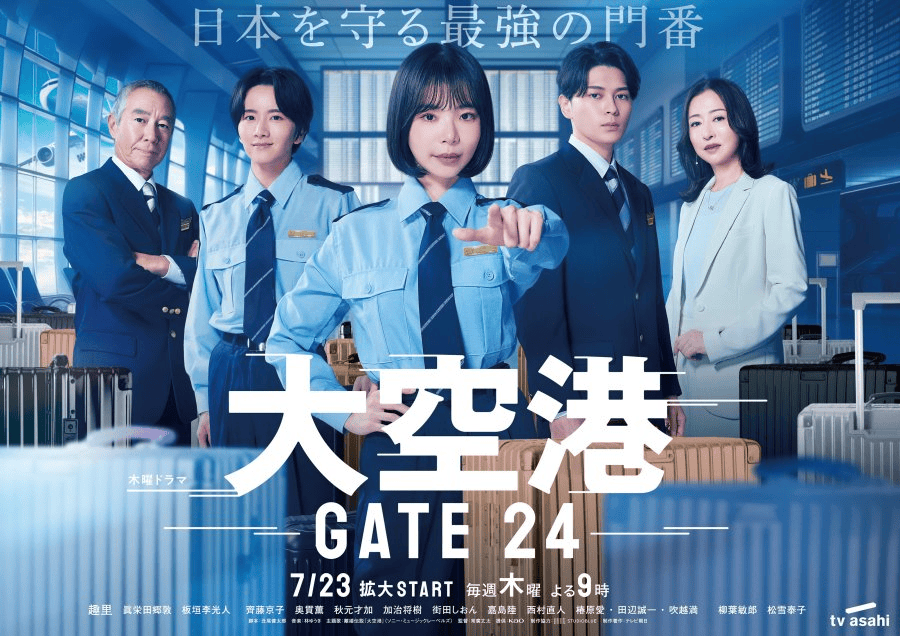
GATE24 J-Drama Versus Japan’s Real Border System
Where the 2026 airport drama reflects reality—and where television takes control #GATE24 #JapaneseDrama #JapanImmigration An airport border can look deceptively simple from the passenger side: present a passport, collect a suitcase and walk through…

J-Music Trends: Last 30 Days — Sep 2026
#JMusic #JapanCharts #MusicTrends Overview of the Last 30 Days Public discussion around Japanese music increasingly treats “viral” and “popular” as interchangeable, but August 2026 provides a useful reminder that they measure different things. TikTok’s…

Japan Billboard Hot 100 Highlights — August 2026
#BillboardJapan #Jpop #JapanMusic August 2026 produced four different weekly leaders on the Billboard Japan Hot 100: timelesz opened the month with “消えない花火,” TWS followed with “SODA SODA,” EBiDAN pushed the already-charting “Yes! 東京” from…

The Complex Lessons of Mr. Hiiragi’s Homeroom: Truth and Consequences
#MrHiiragisHomeroom #JDramaReview #JapaneseDrama Mr. Hiiragi’s Homeroom begins with an act that appears impossible to defend. Ten days before graduation, art teacher Ibuki Hiiragi locks the 29 students of Class 3-A inside their school and…

JO1 in 2026: Members, Music and More
#JO1 #JPop #JapaneseMusic Japanese boy groups have traditionally grown through agency-led training systems, television exposure, physical-record sales and highly developed domestic fandoms. JO1 entered that industry through a different route. Formed from the first…

Japanese Music Trends (Last 30 Days) — August 2026
#JMusic #JapanCharts #MusicTrends Overview of the Last 30 Days Japanese music activity during July 2026 was divided between major new releases and songs gaining renewed visibility through short-form video. TikTok’s weekly Japanese music chart…

Japan Billboard Hot 100 Highlights — July 2026
#BillboardJapan #Jpop #JapanMusic Overview July 2026 produced five different weekly leaders on the Billboard Japan Hot 100: ≠ME’s “愛くださいませ,” BE:FIRST’s “Missing,” Snow Man’s “グッタイム,” Number_i’s “BUGS LIFE,” and Nogizaka46’s “是非に及ばず.” Three of those songs…

The Greatest Teacher: Beyond Bullying
#Jdrama #TheGreatestTeacher #JapaneseCulture Japanese school dramas typically feature inspirational teachers and rebellious students, often showcasing transformations through determination. However, The Greatest Teacher: One Year Later, I Was Attacked by a Student starts with this…

Japan Billboard Hot 100 Highlights — June 2026
#BillboardJapan #Jpop #Jdramatastic Overview June 2026 on the Billboard Japan Hot 100 was defined by fast weekly leadership changes, with CUTIE STREET, JI BLUE, Sakurazaka46, and Kenshi Yonezu each reaching #1 across the four…

Japan Sinks: People of Hope Review | Political Disaster Drama Explained
#JapanSinks #JDrama #JapaneseCulture Few Japanese stories have influenced disaster fiction as profoundly as Sakyo Komatsu’s Japan Sinks (Nihon Chinbotsu), first published in 1973. The novel encapsulates Japanese anxiety about losing the homeland amidst earthquakes…

BE:FIRST: Talent, Awards and New Challenges
#BEFIRST #JPop #JapaneseMusic For decades, the Japanese music industry has been dominated by carefully managed idol groups, talent agencies, and established entertainment systems. While many successful artists have emerged from those structures, the modern…

Japanese Music Trends (Last 30 Days) June 2026
#JMusic #JapanCharts #MusicTrends Overview of the Last 30 Days Japanese music trends over the past month have continued to be shaped by three dominant forces: sustained streaming performance, anime and television tie-ins, and short-form…

Japan Billboard Hot 100 Highlights — May 2026
BillboardJapan #Jpop #JapanMusic Overview May 2026 was one of the most competitive months on the Billboard Japan Hot 100. Four weekly charts produced multiple leadership changes, major idol-group debuts, and continued evidence that Japan’s…

Good Luck!! And Japan’s Aviation Culture
#GoodLuck #TakuyaKimura #JapaneseDrama Introduction When discussing Japanese television dramas that became cultural phenomena rather than simple entertainment productions, Good Luck!! remains one of the most recognizable workplace dramas of the early 2000s. The 2003…

Billboard Japan’s Longest-Running Songs
#BillboardJapan #JapaneseMusic #Jdramatastic The newest Billboard Japan Hot 100 update released today highlighted one of the biggest realities of the modern Japanese music industry: true success is no longer measured only by peak chart…
Discover more from Jdramatastic
Subscribe to get the latest posts sent to your email.