Historical perspective

At the end of the 2000s, Japanese television entered a decisive phase. High-concept dramas began merging entertainment with intellectual inquiry, reflecting a society once again questioning the cost of progress. Within this context, JIN premiered in 2009 and immediately redefined what a prime-time J-drama could achieve. Adapted from Motoka Murakami’s manga, JIN fused historical drama, medical realism, and time-travel ethics into a work that resonated deeply with both mainstream audiences and critics.
Overview

JIN follows Minakata Jin, a modern neurosurgeon who is mysteriously transported from contemporary Tokyo to late Edo-period Japan. Stranded in a world without antibiotics, anesthesia, or modern surgical tools, Jin must rely on memory, improvisation, and moral conviction to save lives—while confronting the terrifying possibility that changing the past could irreversibly alter the future.
This is not escapist fantasy. JIN is a sober exploration of responsibility, knowledge, and human dignity across time.
Why JIN Became a Defining J-Drama
- Introduced medical realism rarely seen in historical television
- Portrayed Edo society with exceptional historical care
- Framed time travel as an ethical burden, not a power
- Achieved extraordinary ratings, including a historic finale
- Delivered a sequel (2011) that completed the narrative without dilution
Main Cast & Character Profiles

Osawa Takao as Minakata Jin
A brilliant neurosurgeon burdened by guilt and professional isolation. Osawa portrays Jin with restrained intensity and quiet humanity.
His performance balances scientific rationality with emotional fragility.
Jin’s ethical struggles form the philosophical core of the drama.
This role is widely regarded as one of osawa’s career-defining performances.

Ayase Haruka as Saki Tachibana
A samurai’s daughter grounded in Edo-period values.
Ayase gives Saki warmth, resolve, and emotional intelligence.
She becomes Jin’s moral compass rather than a passive love interest.
Saki bridges compassion and tradition with quiet strength.
The role expanded Ayase’s dramatic range and cultural stature.
Miki Nakatani as Nokase
A mysterious courtesan shaped by survival and social constraint.
Nakatani delivers a layered, restrained performance.
Her character exposes Edo-era gender and class limitations.
Nokase represents emotional realism within historical rigidity.
One of the drama’s most psychologically complex roles.
Masato Sakai as Ryōma Sakamoto (young)
An idealistic historical figure embodying Japan’s future.
Sakai portrays Ryōma with intelligence and youthful urgency.
His interactions with Jin drive the modernization theme.
Ryōma symbolizes change without fanaticism.
A key early role in Sakai’s rise to prominence.
Seiyō Uchino as Ryōma Sakamoto (later portrayal)
A mature, resolute vision of the same historical figure.
Uchino adds gravitas and political awareness.
His portrayal reflects the weight of impending national transformation.
The dual casting reinforces the passage of time.
A subtle yet powerful narrative device.
Koichi Sato as Kurokawa
A physician rooted in traditional medicine and hierarchy.
Sato avoids caricature, portraying skepticism with dignity.
His conflict with Jin reflects institutional resistance to change.
Gradual mutual respect defines his arc.
A nuanced portrayal of generational authority.
Core Themes
- Medical ethics beyond historical boundaries
- The unintended consequences of intervention
- Knowledge versus fate
- Love that transcends time
- Japan’s uneasy path toward modernization
JIN refuses to glorify progress blindly; it insists on humility.
Cultural & Industry Impact
When JIN aired in 2009, it did more than dominate ratings—it recalibrated expectations for what a prime-time J-drama could accomplish intellectually and emotionally.
Redefining Prime-Time Ambition
JIN proved that mainstream audiences were willing to engage with complex ethical debates, historical nuance, and scientific realism. At a time when many dramas leaned toward light romance or formulaic storytelling, JIN demanded sustained attention, moral reflection, and historical awareness—without sacrificing entertainment value.
This success encouraged broadcasters, particularly TBS, to greenlight higher-concept projects that blended genre experimentation with serious themes.
Medical Drama with Scholarly Credibility
Unlike conventional medical dramas, JIN integrated accurate historical medicine, portraying Edo-period surgical limitations, herbal practices, and social taboos surrounding disease. The drama consulted medical advisors, lending credibility that later medical series would openly emulate.
As a result, JIN became frequently referenced in:
- medical humanities discussions
- ethics seminars
- Japanese pop-culture studies
- university courses examining science in fiction
Few television dramas achieved this level of cross-disciplinary relevance.
Edo Period Reintroduced to a New Generation
JIN played a key role in revitalizing interest in the late Edo period among younger viewers. Rather than romanticizing samurai culture, it portrayed Edo society as fragile, hierarchical, and medically vulnerable—making history feel immediate and human.
Tourism boards and cultural institutions later cited JIN as part of a broader wave that renewed public curiosity about:
- Bakumatsu history
- historical medical practices
- figures such as Ryōma Sakamoto
Industry Influence & Legacy
- The drama’s finale exceeded 25% ratings, an extraordinary achievement in late-2000s television
- Its 2011 sequel was greenlit due to overwhelming demand, not franchise obligation
- The series became a benchmark for “prestige J-dramas”, influencing later works that combined science fiction, history, and ethical inquiry
- It elevated the careers of its cast, particularly solidifying Ohsawa Takao and Ayase Haruka as top-tier dramatic leads
Long-Term Reputation
More than fifteen years later, JIN remains:
- a frequent entry on “greatest J-dramas of all time” lists
- a reference point for discussions on time travel ethics in Japanese media
- a drama often recommended to international audiences as an example of Japanese television at its most refined
Its endurance is not based on nostalgia—but on relevance. JIN continues to ask questions modern societies still struggle to answer: Should knowledge always be used? And who bears the cost when it is?
Jdramatastic Emoji Ranking
🧠 Story & Concept: ⭐⭐⭐⭐⭐
🎭 Acting: ⭐⭐⭐⭐⭐
🏯 Historical Accuracy: ⭐⭐⭐⭐✨
🎼 Music & Atmosphere: ⭐⭐⭐⭐
💔 Emotional Impact: ⭐⭐⭐⭐⭐
Overall: 🌸🌸🌸🌸🌸 — A timeless masterpiece
JIN endures because it respects both history and humanity. It asks uncomfortable questions and offers no easy absolution. Knowledge saves lives—but never without cost. This is Japanese television at its most disciplined, intelligent, and compassionate.
If one drama explains why J-dramas deserve global recognition, JIN stands at the forefront.
Sources
https://www.tbs.co.jp/jin2009/
https://asianwiki.com/Jin
https://mydramalist.com/145-jin
https://en.wikipedia.org/wiki/Jin_(TV_series)
other posts:

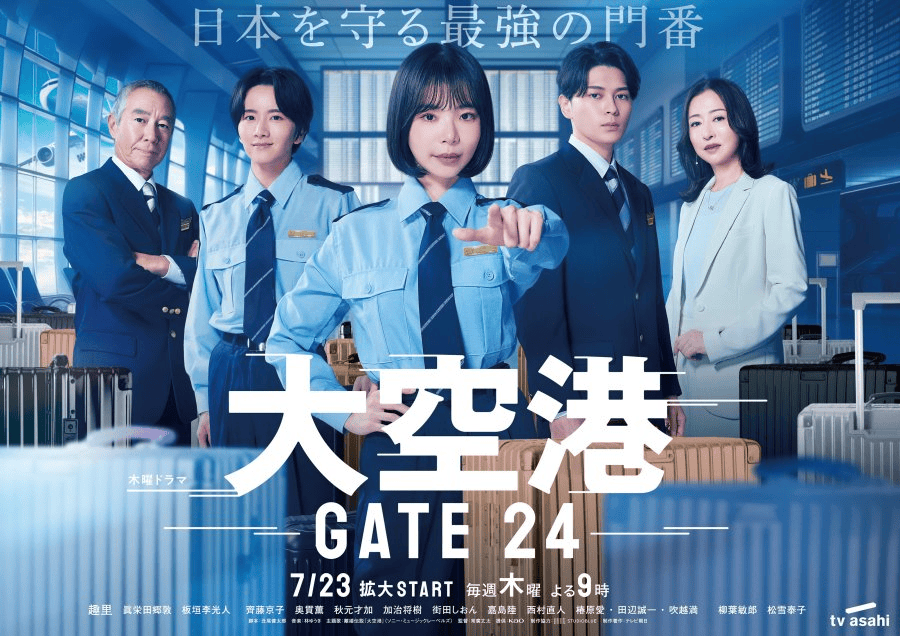
GATE24 J-Drama Versus Japan’s Real Border System
Where the 2026 airport drama reflects reality—and where television takes control #GATE24 #JapaneseDrama #JapanImmigration An airport border can look deceptively simple from the passenger side: present a passport, collect a suitcase and walk through Customs. GATE24…

The Complex Lessons of Mr. Hiiragi’s Homeroom: Truth and Consequences
#MrHiiragisHomeroom #JDramaReview #JapaneseDrama Mr. Hiiragi’s Homeroom begins with an act that appears impossible to defend. Ten days before graduation, art teacher Ibuki Hiiragi locks the 29 students of Class 3-A inside their school and announces that…

The Greatest Teacher: Beyond Bullying
#Jdrama #TheGreatestTeacher #JapaneseCulture Japanese school dramas typically feature inspirational teachers and rebellious students, often showcasing transformations through determination. However, The Greatest Teacher: One Year Later, I Was Attacked by a Student starts with this formula and…

Japan Sinks: People of Hope Review | Political Disaster Drama Explained
#JapanSinks #JDrama #JapaneseCulture Few Japanese stories have influenced disaster fiction as profoundly as Sakyo Komatsu’s Japan Sinks (Nihon Chinbotsu), first published in 1973. The novel encapsulates Japanese anxiety about losing the homeland amidst earthquakes and tsunamis,…

Good Luck!! And Japan’s Aviation Culture
#GoodLuck #TakuyaKimura #JapaneseDrama Introduction When discussing Japanese television dramas that became cultural phenomena rather than simple entertainment productions, Good Luck!! remains one of the most recognizable workplace dramas of the early 2000s. The 2003 TBS series…

Asura (Netflix Japan): The Family Drama That Reveals the Asura Within
#JDrama #NetflixJapan #Asura Overview Family dramas have long been one of the most powerful storytelling formats in Japanese television. From quiet domestic conflicts to deeply personal moral dilemmas, these narratives often mirror broader social realities. Among…

Last Samurai Standing (Ikusagami) – Netflix Japan’s Samurai Survival Drama
#NetflixJapan #Jdrama #Samurai Japanese historical dramas have long explored the fall of the samurai class and the dramatic transformation of Japanese society after the collapse of the Tokugawa shogunate in 1868. During the Meiji era, Japan…

Cinderella Closet (2019) Review: Netflix J-Drama, Beauty & Cross-Dressing
#jdrama #cinderellacloset #netflixjp Japanese storytelling has long embraced transformation—from kabuki’s onnagata to modern dramas where clothes become masks, shields, or keys to survival. In the late 2010s, audiences were quietly shifting away from loud rom-com formulas…

Romantics Anonymous – J-Drama Review – Netflix 2025
Romantics Anonymous portrays Japanese romance with emotional restraint, focusing on mental health, personal responsibility, and the subtleties of connection.
Discover more from Jdramatastic
Subscribe to get the latest posts sent to your email.