

#MrHiiragisHomeroom #JDramaReview #JapaneseDrama
Mr. Hiiragi’s Homeroom begins with an act that appears impossible to defend. Ten days before graduation, art teacher Ibuki Hiiragi locks the 29 students of Class 3-A inside their school and announces that they are now his hostages. Explosions isolate the classroom, threats establish his authority, and one question becomes the centre of his “final lesson”: why did their classmate, Reina Kageyama, take her own life? [Nippon TV official story]
That premise makes the 2019 Nippon TV series sound like a conventional hostage thriller. It is not. Written by Shogo Muto, the ten-episode drama uses its mystery to examine bullying, manufactured images, online judgement and the ease with which a crowd can destroy someone without accepting individual responsibility. The methods used by its teacher remain extreme and criminal; the story does not need viewers to pretend otherwise. Its real challenge is to look beyond the sensational method and consider the social behaviour that Hiiragi is forcing into public view.
This review discusses the premise and themes without revealing the complete solution to the mystery. A separate spoiler section near the end examines the conclusion more directly and is clearly marked.

J-Drama Profile
- Japanese title: 3-nen A-gumi: Ima kara Mina-san wa, Hitojichi Desu (3年A組―今から皆さんは、人質です―)
- International title: Mr. Hiiragi’s Homeroom
- Network: Nippon TV
- Japanese broadcast: January 6 to March 10, 2019
- Episodes: 10
- Genre: School mystery, suspense, social drama
- Screenwriter: Shogo Muto
- Directors: Naoko Komuro, Yuma Suzuki and Itaru Mizuno
- Lead actor: Masaki Suda
- Theme song: “Ikiru” by The Cro-Magnons
These production details are confirmed by Nippon TV’s Japanese programme pages and its international catalogue. The broadcaster describes the drama as a time-limited story unfolding across ten days, while the Broadcast Programming Center of Japan records it as a ten-episode series about one teacher, 29 students and their final lesson. [Nippon TV programme catalogue; Broadcast Programming Center of Japan]
A Classroom Built Like a Pressure Cooker
The first episode establishes the classroom as both a prison and a social laboratory. Hiiragi does not simply demand information. He assigns deadlines, controls what the students can see, and turns their private histories into collective problems. Class 3-A cannot escape by treating Reina’s death as something that concerned only her closest friends. Each answer reveals another choice, another silence or another act of participation.
This structure gives the drama an unusually clear engine. One day largely corresponds to one episode, so the countdown to graduation is also a countdown to the truth. New evidence changes the meaning of earlier scenes, while the students’ alliances shift as their excuses become harder to maintain. According to Nippon TV’s first-episode synopsis, Hiiragi appoints class representative Sakura Kayano to give the class’s answer. That decision matters because Sakura initially seems timid and uncertain, but she gradually becomes the emotional witness through whom the audience understands Reina as a person rather than merely the dead girl at the centre of a plot. [Nippon TV Day 1 story]
The confined setting could easily have become visually repetitive. Instead, changes in power keep the room alive. Desks become barriers, the blackboard becomes a screen for evidence, and the teacher’s platform becomes an unstable stage from which Hiiragi alternates between lecturer, interrogator, performer and apparent villain. Outside the room, police, teachers, journalists and social-media users widen the drama’s scale. The hostage crisis may be physically contained, but its interpretation is public and constantly mutating.
Masaki Suda’s Controlled, Volatile Performance
The series depends on Masaki Suda persuading viewers that Hiiragi can be frightening, physically vulnerable, sincere and strategically deceptive without becoming four unrelated characters. He succeeds. In one scene, his stillness is more threatening than shouting; in another, the anger breaks through because a student has reduced a human tragedy to an excuse. His performance keeps the mystery open because even apparent weakness may be part of the lesson.
Suda also understands that Hiiragi is a teacher who has turned education into theatre. He controls attention with costumes, recordings, timing and calculated revelations. The performance is deliberately larger than ordinary classroom realism, yet Suda gives the speeches enough personal urgency to stop them becoming empty slogans. His voice and physical exhaustion increasingly expose what the plan costs him.
The industry recognition was substantial. Mr. Hiiragi’s Homeroom received the Grand Prix for Series Drama at the Tokyo Drama Awards 2019, and Suda received Best Performance by an Actor for the series. Shogo Muto also received the screenplay prize at the 15th Confidence Award Drama Prize. Those honours do not prove that every viewer will accept the drama’s moral methods, but they confirm that its writing and lead performance were recognised beyond audience popularity. [Tokyo Drama Awards reporting; Oricon]

Mei Nagano Gives the Mystery Its Conscience
Sakura Kayano is not written as the strongest, cleverest or most socially powerful student. That is precisely why she is important. Mei Nagano plays her as someone who has information, memories and guilt but lacks the confidence to organise them. Sakura’s hesitations do not feel like artificial delays created for the plot. They feel like the behaviour of a young person who knows that speaking honestly will expose both other people and herself.
Nagano’s performance grows without abandoning Sakura’s sensitivity. Her strength is not transformed into aggression; it becomes the ability to look at painful evidence without turning away. As classmates begin to understand that silence is also a choice, Sakura becomes a moral centre who can challenge them without claiming innocence for herself.
Her relationship with Reina is essential to the drama’s critique of the labels applied to victims. Publicly, Reina was admired as a talented swimmer and treated as a visible figure within the school. Privately, however, admiration did not guarantee that anyone understood her. Through Sakura, the series asks whether saying “I was her friend” means anything if fear, jealousy or convenience prevented genuine listening.
The Drama’s Strongest Theme: Think Before You Attack
The message of Mr. Hiiragi’s Homeroom is sometimes summarised as “think before you post,” but that description is too narrow. The drama is concerned with the complete chain of harm: the person who creates false material, the person who distributes it, the people who repeat it, the spectators who reward it with attention and the institutions that react before verifying it.
The series was broadcast in 2019, but its treatment of manipulated video has become more relevant in an era of generative AI, synthetic media and instant mass judgement. A convincing image can travel farther than a correction, while emotional certainty can replace evidence. The drama does not need to predict every technical development to identify the human weakness underneath them: people often share what confirms the story they already want to believe.
It also makes an important distinction between asking questions and delivering punishment. Suspicion is not proof. A trending accusation is not an investigation. A person joining thousands of hostile comments may imagine that one message has no consequence, but the target experiences the total force of the crowd. Hiiragi’s repeated demand that his students stop and think is therefore about responsibility, not simply politeness.
This is where the drama remains unusually valuable. Many stories about online bullying focus on one obvious bully, allowing everyone else to identify the villain and feel innocent. Mr. Hiiragi’s Homeroom is more uncomfortable. It shows how harm can be distributed across many people whose individual actions look small. The audience is not permitted to observe that system from a safe moral distance because the series repeatedly shows the public behaving exactly like the students: reacting first, choosing a target and changing sides when a new fragment appears.
Real-Life Comparison: The Hana Kimura Case

The death of Japanese professional wrestler and Terrace House: Tokyo 2019–2020 cast member Hana Kimura provides a painful real-world comparison with the warning at the centre of Mr. Hiiragi’s Homeroom. Kimura died on May 23, 2020, aged 22, after receiving extensive abuse on social media. The case must be discussed with precision and respect: an official broadcasting review did not establish that one programme, one episode or online abuse alone caused her death. The Broadcasting Ethics & Program Improvement Organization, commonly known as BPO, explicitly said that the causal relationship between the programme and her death could not be determined. [BPO decision and press conference]
There is also an important difference between the two cases. In Mr. Hiiragi’s Homeroom, the image at the centre of the scandal is a deliberately fabricated video designed to create a false accusation against Reina. The Terrace House footage involving Kimura was not proven to be a digitally fabricated “fake video.” It was edited reality-television material presenting an angry confrontation after a male housemate accidentally damaged an important wrestling costume in a washer-dryer. Kimura’s mother, Kyoko Kimura, alleged that production choices and instructions shaped how her daughter was presented; Fuji Television disputed the allegations of coercive direction. BPO found that the facts concerning alleged excessive editing and production could not be established and did not find a broadcasting-ethics violation on that specific issue. Those disputed production questions should therefore not be reported as settled facts.
What is confirmed is that viewers saw a selected television version of a conflict and many behaved as though that version gave them complete knowledge of Kimura’s character. According to the BPO’s official chronology, the confrontation was streamed on Netflix on March 31, 2020 and attracted numerous abusive comments. An additional unaired clip was placed on YouTube on May 14 and criticism intensified again. The episode was broadcast on terrestrial television on May 19. Kimura died four days later. [BPO Decision No. 76]
BPO did not find violations of Kimura’s rights to self-determination, personality or privacy. On the separate claim that the broadcast caused a human-rights violation through viewers’ conduct, the committee said it could not go so far as to conclude that a violation had occurred. However, it found a broadcasting-ethics problem because the decision-making process lacked sufficient consideration for Kimura’s physical and mental condition. This distinction matters. The decision was not a finding that the broadcaster caused her death, nor was it a declaration that the programme’s handling was ethically acceptable.
From a Screen Narrative to Collective Punishment
The clearest connection with Mr. Hiiragi’s Homeroom is not that the videos were technically identical. They were not. The connection is the audience’s conversion of a limited screen narrative into a licence to punish a real person.
| Stage | Reina’s fictional case | Hana Kimura’s real case |
|---|---|---|
| Image presented | A deliberately manipulated video | Edited reality-TV footage of a confrontation |
| Missing element | The video’s fabrication and the people behind it | The complete production context and Kimura’s private circumstances |
| Audience reaction | Rumour, condemnation and social isolation | Large-scale hostile and abusive social-media comments |
| False assumption | “The video proves the whole accusation” | “One televised conflict reveals her whole character” |
| Human consequence | Reina is reduced to a scandal rather than treated as a person | Kimura faced abuse directed at her as a real individual, not a fictional role |
In both situations, commenters mistake visibility for knowledge. They see an image, feel an emotion and assume that their emotional response establishes the complete truth. The screen removes context while the crowd removes restraint. A single person may tell themselves that one hostile message is insignificant, yet the recipient encounters hundreds or thousands of individual choices as one continuous assault.
The Kimura case also exposes a dangerous feature of reality television: audiences may understand intellectually that footage is selected and edited but still react to cast members as if they have observed their complete, unmediated personalities. Editing does not automatically make footage false, but it does make it partial. A responsible viewer must distinguish among what the video literally shows, what the programme suggests and what cannot be known from the material provided.
“Everyone Else Was Doing It” Is Not a Defence
The legal aftermath demonstrated that anonymous participation does not erase individual responsibility. In 2021, one man who sent abusive messages to Kimura received a summary fine of ¥9,000 for public insult. In a separate civil case concerning defamatory posts made after her death, the Tokyo District Court ordered another man to pay approximately ¥1.29 million, including damages and identification-related costs. [International reporting; TV Asahi]
Japan subsequently increased the statutory penalty for the offence of public insult. The Ministry of Justice states that the 2022 amendment raised the possible punishment to up to one year of imprisonment or a fine of up to ¥300,000, while retaining detention and petty fines among the available penalties. The reform did not make every criticism illegal, nor did it remove the need to balance enforcement with freedom of expression. It strengthened the possible response to punishable insults, particularly amid concern about severe online abuse. [Japan Ministry of Justice]
The ethical standard should be higher than the minimum required to avoid prosecution. Before commenting, a viewer should ask: Is the material authentic? Is it complete? Am I criticising a specific action, or declaring that a person is worthless? Am I adding evidence, or merely joining a crowd? Would the comment still seem acceptable if the recipient and their family read it together?
That is the point at which Mr. Hiiragi’s Homeroom stops being only a thriller. Its fictional fake-video storyline and the real abuse directed at Hana Kimura are not interchangeable cases, but they expose the same failure of thought. A screen can supply an image; it cannot supply permission to dehumanise the person inside it.
Where the Series Is Less Convincing
The drama’s urgency is also its main weakness. Hiiragi’s lessons are emotionally forceful, but the script sometimes repeats its moral position after the point is already clear. Characters deliver speeches in moments when quieter behaviour might have been more convincing. Viewers who prefer subtle social realism may find parts of the final episodes overly theatrical.
The hostage premise creates a deeper ethical problem. Hiiragi wants students to recognise the human consequences of coercion and public cruelty, but he teaches this through terror, physical control and the threat of death. The story provides context for his choices; context is not the same as moral justification. A strong reading of the series should preserve that tension rather than declaring that a good intention erases every abuse committed in its name.
The large class is another limitation. Nippon TV introduced 29 student characters, and several future stars appear among them, but a ten-episode series cannot give all of them equal depth. Certain students receive meaningful personal arcs while others function mainly as part of the crowd. The ensemble creates believable classroom energy, yet some potentially interesting reactions remain underdeveloped.
There are also moments when the mystery relies on precisely timed revelations and elaborate preparation. The production asks viewers to accept a heightened thriller reality rather than measure every action against an ordinary police procedure. For audiences willing to make that agreement, the momentum works extremely well. For viewers seeking strict realism, the machinery may be too visible.
Direction, Music and Pacing
Directors Naoko Komuro, Yuma Suzuki and Itaru Mizuno maintain a heightened visual language appropriate to the premise. Tight framing makes the classroom feel crowded and unstable, while broader exterior scenes remind viewers that the crisis is becoming a national spectacle. Screens are repeatedly placed inside the frame, reinforcing the idea that characters rarely encounter events directly; they encounter selected images and other people’s interpretations.
Akihiko Matsumoto composed the original soundtrack. Nippon TV lists “Ikiru” by The Cro-Magnons as the theme song, and its blunt rock energy suits a drama that repeatedly returns to the value and difficulty of living. [Nippon TV music page] The music often pushes the story toward emotional confrontation, which matches the series’ direct style even when restraint might have produced a different kind of power.
Pacing is one of the show’s clearest achievements. The ten-day structure generates a natural cliffhanger, but the writers do more than withhold one final answer. Each episode resolves part of the chain while revealing that the newly identified culprit may also have been pressured, deceived or used by someone else. Responsibility expands instead of moving neatly from one villain to another.
Main and Key Supporting Cast
Masaki Suda — Ibuki Hiiragi
Masaki Suda leads the series as Ibuki Hiiragi, the art teacher and homeroom instructor who takes Class 3-A hostage. His agency biography confirms that the Nippon TV drama ran from January 6 to March 10, 2019, with Suda in the starring role. He makes Hiiragi’s physical fragility, anger and careful control feel like parts of one deliberately concealed plan. His performance earned Best Performance by an Actor at the Tokyo Drama Awards 2019. The role requires moral intensity without easy likability, and Suda gives the drama its commanding centre.
Mei Nagano — Sakura Kayano
Mei Nagano plays Sakura Kayano, the class representative selected to answer Hiiragi’s questions on behalf of the students. Nippon TV’s official first-episode synopsis identifies Sakura as the student placed at the centre of the class’s search for an answer. Nagano begins with visible uncertainty and gradually turns Sakura into the story’s most dependable emotional witness. Her performance is strongest when guilt, affection and fear exist in the same quiet reaction. Sakura’s development gives the mystery a human perspective that facts and twists alone could not provide.
Moka Kamishiraishi — Reina Kageyama
Moka Kamishiraishi portrays Reina Kageyama, the student whose death becomes the central question of Hiiragi’s final lesson. Nippon TV introduced Reina as an admired but isolated girl carrying an important secret. Although the story begins after Reina’s death, memories and recorded images continually revise the audience’s understanding of her. Kamishiraishi resists turning Reina into a simple symbol and instead suggests pride, fear, loneliness and a wish to be understood. Her performance gives weight to the drama’s insistence that a public image can conceal a private crisis.
Ryota Katayose — Hayato Kai
Ryota Katayose plays Hayato Kai, an influential and confrontational student whose choices become important to the investigation. Nippon TV’s official cast announcement identifies Katayose as student number seven and confirms the character’s name. Kai initially appears to fit the familiar role of the aggressive classroom rebel, but his circumstances complicate that impression. Katayose brings physical confidence to the role while allowing the character’s pressure and vulnerability to emerge gradually. His arc supports the drama’s argument that explanation and accountability must coexist rather than cancel each other out.
Kippei Shiina — Masahiko Gunji
Kippei Shiina portrays Masahiko Gunji, the detective attempting to understand Hiiragi’s history and true objective. Nippon TV’s episode summaries show Gunji investigating the teacher’s previous school and pursuing the case outside Class 3-A. Shiina gives the series a grounded adult presence against the heightened emotions inside the classroom. Gunji is neither a passive observer nor a simple obstacle, and his judgement develops as new evidence changes the apparent truth. The character expands the drama from a school mystery into a confrontation between institutions, individuals and public perception.
Seiichi Tanabe — Yamato Takechi
Seiichi Tanabe plays Yamato Takechi, a highly visible teacher whose public identity becomes important later in the investigation. Nippon TV’s official seventh-episode synopsis confirms that Hiiragi publicly names Takechi while examining the manipulated video. Tanabe uses charm, defensiveness and self-conscious performance to show a man acutely aware of how the public sees him. The role becomes a test of the series’ own warning: an accusation can redirect a crowd before the evidence is complete. His storyline sharply connects school politics, media visibility and the dangerous speed of online judgement.
Cultural Perspective: The Classroom and Collective Responsibility
The homeroom is an especially effective Japanese setting because it is not merely a room where students attend one subject. It is an administrative and social unit with its own teacher, class representative, routines and shared identity. The title foregrounds Hiiragi’s relationship to the entire group, not only to the students most directly connected to Reina.
However, the drama should not be treated as a documentary about Japanese schools. Explosives, hostage-taking and the scale of the conspiracy belong to a heightened television thriller. What feels socially recognisable is the pressure to maintain group harmony, the danger of exclusion, the significance of reputation and the possibility that collective order can hide individual suffering.
The series is particularly critical of superficial unity. A class photograph, a morning exercise or a shared graduation date can suggest togetherness without proving that students protect one another. Real solidarity begins when members accept that another person’s suffering is worth interrupting the comfortable routine. In that sense, Hiiragi’s classroom is a distorted attempt to make responsibility impossible to avoid.
Spoiler Discussion: What the Ending Means
Major spoilers begin here.
The final phase reveals that the drama’s ultimate target is not only the individual who commissioned or created a false video. It is the wider public behaviour that converted fragments into certainty and certainty into sustained abuse. Reina’s death cannot be explained by one mechanical answer because social harm accumulated around her. The series refuses the satisfying fantasy that removing a single villain repairs the system.
Hiiragi turns himself into the final object of mass judgement so that the crowd’s behaviour becomes visible in real time. The plan is theatrical because the audience inside the story needs spectacle before it will pay attention. This explains the hostage crisis, but it does not remove its moral contradictions. His lesson succeeds narratively because the students learn to think about consequences; ethically, it leaves viewers to decide whether truth achieved through terror can ever be called education.
Sakura’s final importance lies in testimony rather than detective brilliance. She can speak about Reina as someone she knew, failed and loved. That personal accountability is more meaningful than a clean declaration of innocence. The ending argues that responsibility begins when people stop defending their self-image long enough to recognise what their actions did to someone else.
The flash-forward also gives the ten-day crisis a longer measure. A lesson matters only if it changes conduct after the emotional intensity has passed. The students’ return to the classroom frames memory as an ongoing obligation, not a dramatic experience they can consume and forget.
Major spoilers end here.
Is Mr. Hiiragi’s Homeroom Worth Watching?
Yes, particularly for viewers interested in fast-paced J-dramas with an explicit social argument. It combines a strong weekly mystery with an ensemble of young performers who would become increasingly prominent in Japanese film and television. Masaki Suda’s lead performance is the clearest reason to watch, but Mei Nagano and Moka Kamishiraishi prevent the drama from becoming only a showcase for the teacher.
It is not a subtle series. Its speeches are direct, its confrontations are theatrical, and its ethical contradictions cannot be neatly resolved. Yet those qualities are also part of its identity. Mr. Hiiragi’s Homeroom wants viewers to feel accused, not merely entertained. Its best question is not “Who made the video?” but “What did everyone else choose to do with it?”
For an audience living with manipulated clips, algorithmic outrage and instant character assassination, that question has only become more urgent. The technology changes; the human temptation to react without thinking remains.
Jdramatastic Emoji Ranking
- Story: 📚📚📚📚½ — 4.5/5
- Acting: 🎭🎭🎭🎭🎭 — 5/5
- Characters: 👥👥👥👥 — 4/5
- Pacing: ⏳⏳⏳⏳½ — 4.5/5
- Emotional impact: 💔💔💔💔½ — 4.5/5
- Rewatch value: 🔁🔁🔁🔁 — 4/5
- Overall: ⭐⭐⭐⭐½ — 4.5/5
Sources
- Nippon TV — Official programme site: https://www.ntv.co.jp/3A10/
- Nippon TV — Official international catalogue: https://www.ntv.co.jp/english/sphone/pc/2018/12/mr-hiiragis-homeroom.html
- Nippon TV — Official cast and character chart: https://www.ntv.co.jp/3A10/cast/
- Nippon TV — Official Day 1 story: https://www.ntv.co.jp/3A10/story/01.html
- Nippon TV — Official production staff: https://www.ntv.co.jp/3A10/staff/
- Nippon TV — Official music information: https://www.ntv.co.jp/3A10/music/
- Nippon TV — Moka Kamishiraishi cast announcement: https://www.ntv.co.jp/3A10/articles/130tm843n47vmp3tgpo.html
- Nippon TV — Ryota Katayose cast announcement: https://www.ntv.co.jp/3A10/articles/130dtb5dc75zwl38non.html
- TopCoat — Masaki Suda official biography: https://topcoat.co.jp/masaki_suda/contents/biography/tv
- Broadcast Programming Center of Japan — Programme record: https://www.bpcj.or.jp/program/detail/214223/
- Oricon — Tokyo Drama Awards 2019 report: https://www.oricon.co.jp/news/2147466/full/
- Oricon — Confidence Award screenplay prize report: https://www.oricon.co.jp/news/2134469/full/
- Nippon TV — Turkish adaptation announcement: https://www.ntv.co.jp/english/sphone/pressrelease/20200304.html
- Broadcasting Ethics & Program Improvement Organization — Decision No. 76: https://www.bpo.gr.jp/?p=10741
- BPO — Press conference explaining Decision No. 76: https://www.bpo.gr.jp/?p=10771
- TV Asahi — Civil judgment concerning defamatory posts: https://news.tv-asahi.co.jp/news_society/articles/000216573.html
- Japan Ministry of Justice — Increased statutory penalty for public insult: https://www.moj.go.jp/keiji1/keiji12_00194.html
- The Guardian — Criminal penalty for abusive messages sent to Hana Kimura: https://www.theguardian.com/world/2021/mar/31/hana-kimura-death-man-charged-over-cyberbullying-of-japanese-reality-tv-star
other posts :

GATE24 J-Drama Versus Japan’s Real Border System
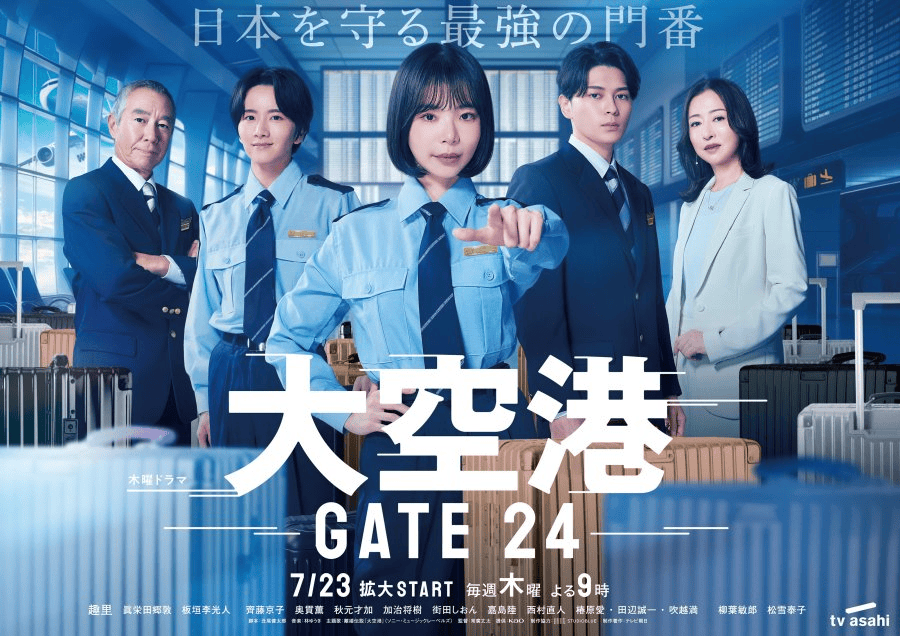
Where the 2026 airport drama reflects reality—and where television takes control #GATE24 #JapaneseDrama #JapanImmigration An airport border can look deceptively simple from the passenger side: present a passport, collect a suitcase and walk through Customs. GATE24 turns the unseen divisions behind that journey into…

Mio Imada: From Fukuoka to Leading Star
#MioImada #JapaneseActress #JDrama Japanese television has a long tradition of turning regional talent into nationally recognized stars, but only a small number of performers successfully move from local advertising work to leading major prime-time dramas and films. Mio Imada is one of the clearest…

Masami Nagasawa: Roles, Fame and Awards
#MasamiNagasawa #JapaneseActress #JapaneseCinema For more than two decades, Japanese audiences have watched Masami Nagasawa grow from a teenage star into one of the country’s most versatile leading actresses. Some viewers first knew her through emotional romances such as Crying Out Love, in the Center…

The Greatest Teacher: Beyond Bullying
#Jdrama #TheGreatestTeacher #JapaneseCulture Japanese school dramas typically feature inspirational teachers and rebellious students, often showcasing transformations through determination. However, The Greatest Teacher: One Year Later, I Was Attacked by a Student starts with this formula and subverts it. This series goes beyond the typical…

Japan Sinks: People of Hope Review | Political Disaster Drama Explained
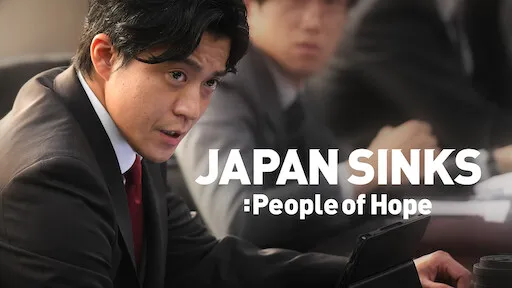
#JapanSinks #JDrama #JapaneseCulture Few Japanese stories have influenced disaster fiction as profoundly as Sakyo Komatsu’s Japan Sinks (Nihon Chinbotsu), first published in 1973. The novel encapsulates Japanese anxiety about losing the homeland amidst earthquakes and tsunamis, inspiring various adaptations over the years. The 2021…

Good Luck!! And Japan’s Aviation Culture
#GoodLuck #TakuyaKimura #JapaneseDrama Introduction When discussing Japanese television dramas that became cultural phenomena rather than simple entertainment productions, Good Luck!! remains one of the most recognizable workplace dramas of the early 2000s. The 2003 TBS series combined romance, aviation realism, workplace pressure, and emotional…

Shun Oguri Career Timeline and Industry Impact
Shun Oguri, born in 1982, is a renowned Japanese actor whose career evolved from minor roles in the 1990s to leading performances across various genres. His journey exemplifies a progressive, diversified approach in Japan’s entertainment industry.

Why Takuya Kimura Is Considered One of Japan’s Most Influential Actors
#TakuyaKimura #JDrama #JapaneseActors For more than three decades, Takuya Kimura has remained one of the most recognizable figures in Japanese entertainment. Rising from SMAP under Johnny & Associates, he successfully transitioned from idol to long-term acting authority—something few have achieved at the same scale.…

Asura (Netflix Japan): The Family Drama That Reveals the Asura Within
#JDrama #NetflixJapan #Asura Overview Family dramas have long been one of the most powerful storytelling formats in Japanese television. From quiet domestic conflicts to deeply personal moral dilemmas, these narratives often mirror broader social realities. Among the most influential stories exploring family dynamics is…

Last Samurai Standing (Ikusagami) – Netflix Japan’s Samurai Survival Drama
#NetflixJapan #Jdrama #Samurai Japanese historical dramas have long explored the fall of the samurai class and the dramatic transformation of Japanese society after the collapse of the Tokugawa shogunate in 1868. During the Meiji era, Japan rapidly modernized and dismantled the feudal system that…

Cinderella Closet (2019) Review: Netflix J-Drama, Beauty & Cross-Dressing
#jdrama #cinderellacloset #netflixjp Japanese storytelling has long embraced transformation—from kabuki’s onnagata to modern dramas where clothes become masks, shields, or keys to survival. In the late 2010s, audiences were quietly shifting away from loud rom-com formulas toward gentler, more intimate narratives about self-worth and…

Narumi Yasuda – Career, Works, Awards & Legacy
Narumi Yasuda transitioned from idol singer to respected actress, known for her naturalistic performances and enduring legacy in Japanese media.

Romantics Anonymous – J-Drama Review – Netflix 2025
Romantics Anonymous portrays Japanese romance with emotional restraint, focusing on mental health, personal responsibility, and the subtleties of connection.

Hiroshi Abe: A Journey of Authenticity in Japanese Acting
Hiroshi Abe, evolving from model to actor, exemplifies Japan’s cultural shift towards realism, earning respect through disciplined performances and steady legacy.

JIN (2009) JDrama: Themes of Ethics and Time Travel
Historical perspective At the end of the 2000s, Japanese television entered a decisive phase. High-concept dramas began merging entertainment with intellectual inquiry, reflecting a society once again questioning the cost of progress. Within this context, JIN premiered in 2009 and immediately redefined what a…

Rikon Bengoshi: Transforming Divorce on Japanese TV
Before the 2000s, Japanese dramas rarely focused on divorce, a subject burdened by deep social stigma and quiet suffering, especially for women. As Japan entered an era of shifting household models, rising dual-income marriages, and increasing divorce rates, public discourse slowly opened to the…

Unnatural: A TBS & Netflix Review of Forensic Science in Japan
Originally aired on TBS in 2018 and now available globally on Netflix, Unnatural (アンナチュラル) stands as one of Japan’s most acclaimed forensic dramas of the decade. Set in the Unnatural Death Investigation (UDI) Laboratory, the story follows Dr. Mikoto Misumi, a passionate forensic pathologist…

The True Value of Education in Dragon Sakura
Based on Norifusa Mita’s manga, Dragon Sakura (2005) and its 2021 sequel portray how a failing school fights back against Japan’s merciless academic hierarchy. Kenji Sakuragi (Hiroshi Abe), a former gangster-turned-lawyer, takes on a mission to guide underperforming students into Tokyo University (Tōdai). Behind…
Discover more from Jdramatastic
Subscribe to get the latest posts sent to your email.




Pingback: Mio Imada: From Fukuoka to Leading Star - Jdramatastic